


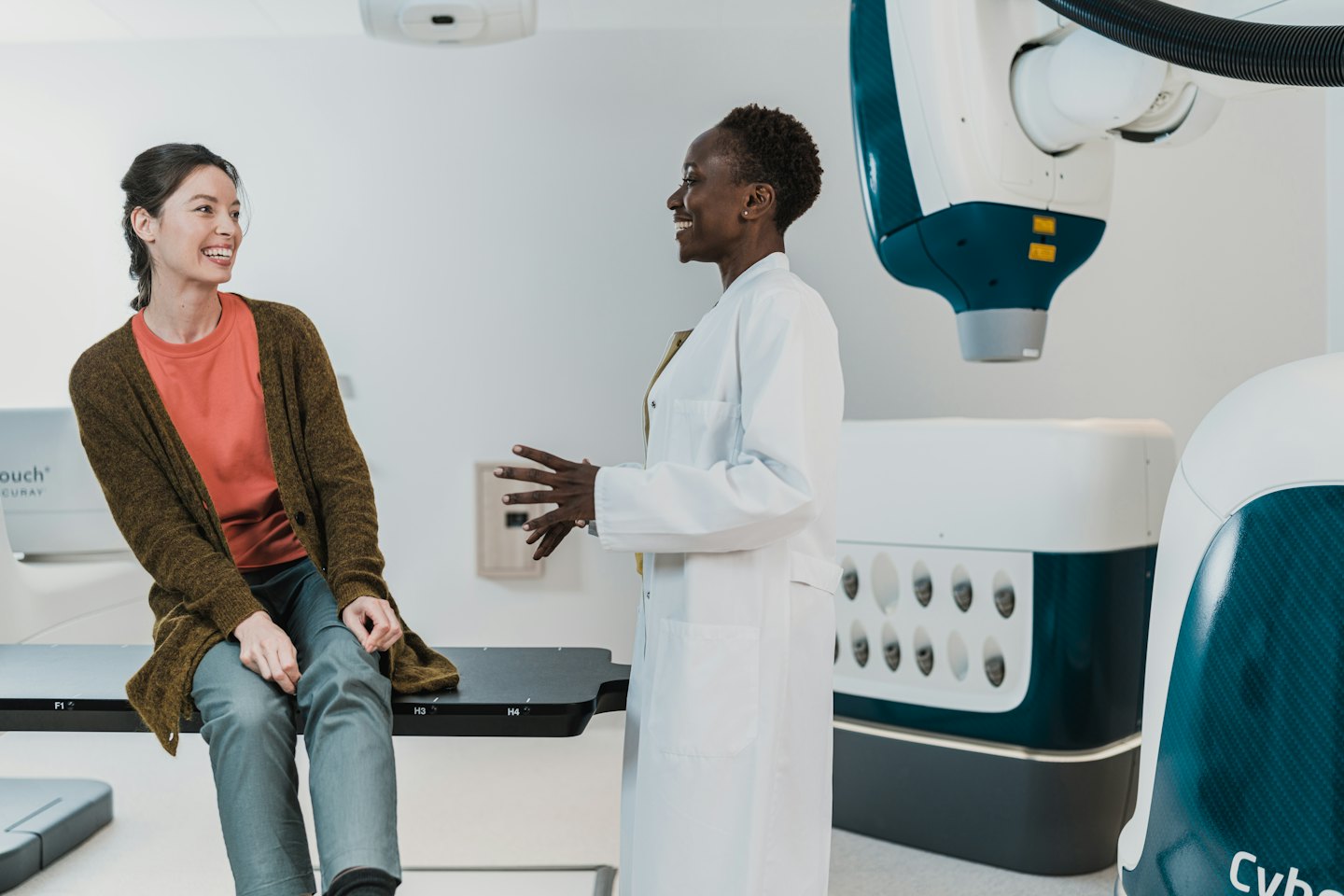
Nuclear medicine uses small amounts of radioactive substances to image and treat disease at a molecular level, giving information about how organs function as well as how they look. The department at our partner hospital works with many specialties, including cardiology, nephrology, orthopaedics, oncology and endocrinology, and has been designed to keep radiation exposure for patients and staff to a minimum. MedLuxLife coordinates referrals, scan appointments and the transfer of results to your treating doctors.

Treatments and services
Neurological applications
Scans that can support the diagnosis of certain strokes, dementia and hydrocephalus, and help locate the seizure focus before epilepsy surgery.
Lung applications
Imaging to investigate pulmonary embolism and to estimate remaining lung function before lung surgery.
Orthopaedic applications
Bone imaging to reveal hidden fractures, bone infection and bone metastases.
Heart applications
Studies to assess coronary artery disease and to evaluate the heart after bypass surgery or stenting.
Kidney applications
Imaging to look for urinary tract obstruction, urine reflux towards the kidneys and kidney infection, and to support kidney transplantation.
Oncology applications
Scans that help distinguish benign from malignant lesions, stage tumours, guide biopsy sites, detect recurrence, assess response to chemotherapy and plan radiotherapy.
Other diagnostic studies
Investigations of goitre, oesophageal, stomach and gallbladder disease, acute intestinal bleeding, hidden infection, lymphatic drainage, tear ducts and salivary gland function.
Patient-focused design
Spacious rooms, zoned layout according to radiation levels and daylight-style lighting in treatment rooms are intended to support comfort and safety.
Clinical applications
- Diagnosis of certain strokes
- Diagnosis of dementia
- Locating the epileptic focus before epilepsy surgery
- Diagnosis of hydrocephalus
- Diagnosis of pulmonary embolism (lung clot)
- Assessment of lung reserve before lung surgery
- Visualising hidden fractures
- Bone infections
- Imaging of bone metastases
- Diagnosis of coronary artery disease
- Evaluation after bypass surgery or stent placement
- Visualising urinary tract obstruction
- Investigating urine reflux to the kidneys
- Investigating kidney infections
- Kidney transplantation
- Differentiating benign from malignant lesions
- Staging of tumours
- Identifying the biopsy site
- Detecting tumour recurrence
- Evaluating response to chemotherapy
- Radiotherapy planning
- Goitre
- Oesophageal and stomach diseases
- Gallbladder diseases
- Acute intestinal bleeding
- Suspected hidden infection
- Examination of lymphatic pathways
- Examination of the tear ducts
- Assessment of salivary gland function
Before you travel
To get a reliable medical opinion quickly, please prepare:
- Recent medical reports and discharge summaries
- Imaging (MRI, CT, X-ray) on CD or as DICOM files, with the radiology reports
- Recent laboratory results
- A list of your current medications and any allergies
- Previous scan images on CD or via download link, with reports
- Recent kidney function and, where relevant, thyroid blood test results
How MedLuxLife supports you
1. Free consultation
Share your wishes and, if available, recent X-rays or photos. We answer your questions and explain the options.
2. Personal treatment plan
Our partner specialists prepare a treatment plan and an estimated timeline tailored to you.
3. Travel & treatment
We coordinate your appointments, hotel and airport transfers, so you can focus on your treatment.
4. Aftercare
We stay in touch after you return home and help with follow-up questions.
Plan your Nuclear Medicine consultation with confidence
Every treatment begins with a personal, no-obligation consultation. Contact us and we will get back to you as soon as possible.
The information on this page is for general guidance only and does not replace a medical consultation. Suitability for any treatment is assessed individually by a qualified doctor.